Grease Removal: Natural or Formulated? An Honest Comparison
Vinegar, lemon, baking soda vs. professional degreasers. How effective is each — and when should you pick which?
The 'natural cleaning' trend has put vinegar, lemon and baking soda centre stage in the kitchen. A good idea? Depends. Let's compare honestly.
Natural methods: what they do, what they don't
Vinegar
Vinegar is acidic — dissolves limescale, mild effect on fresh grease. But polymerised, baked-on grease defeats it. Long-term use on marble, polished stone or stainless steel can dull the surface.
Lemon juice
Citric acid — similar to vinegar. Nicer scent, weaker concentration, so more limited.
Baking soda
Mildly alkaline and abrasive. As a paste, it can lift burnt grease off hobs — but its abrasiveness can mark stainless steel and stone.
What a formulated cleaner adds
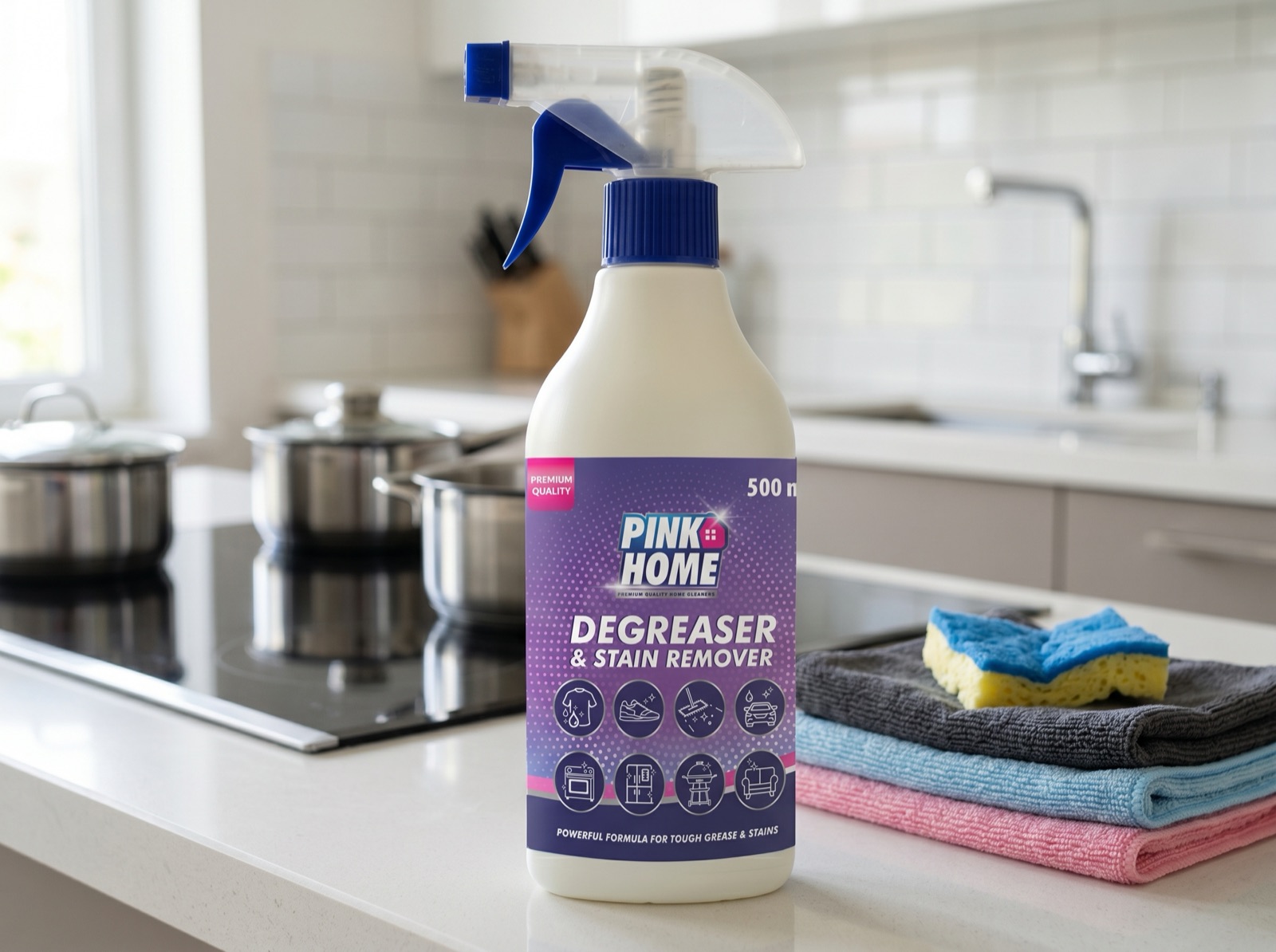
A product like Pink Home Degreaser & Stain Remover combines an alkaline degreaser + biodegradable solvent + surfactant. That trio breaks baked grease at the molecular level; the surfactant suspends residue so one wipe lifts it.
The same job natural methods take 5 minutes, a formula does in 30 seconds. And it's safer on delicate surfaces.
When to use which
- •Fresh splatter on counters: vinegar or lemon is enough.
- •Weekly hob deep-clean: formula wins — faster, no streaks.
- •Extractor filter: formula is the only answer (needs dissolution).
- •Marble / polished stone: never acidic — neutral formula only.
- •Descaling: vinegar works anywhere — but not reliable home-wide.
Begin a calmer ritual.
The Pink Home collection turns every step in this piece into a daily kitchen ritual.